
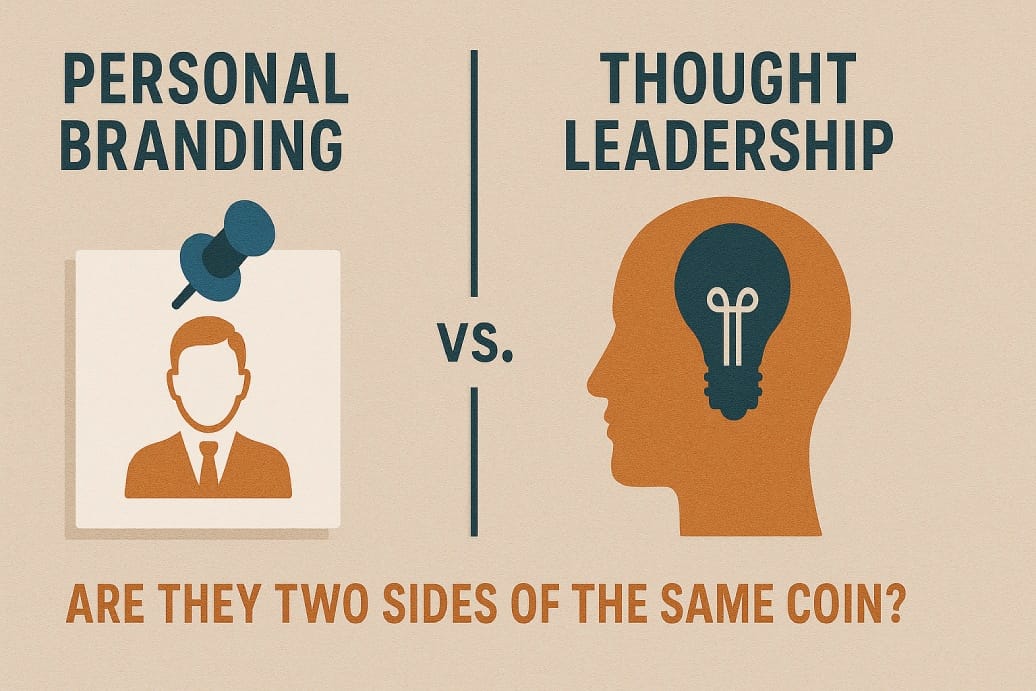
What is the difference between Personal Branding and Thought Leadership? Are they just buzzwords for the same thing?
Many professionals treat them as two sides of the same coin. While there is certainly a strong relationship between the two, and they often overlap in practice, they are distinctly different disciplines. Confusing them can lead to a strategy that feels disjointed or aimless.
Understanding the nuance between the two is key to building a reputation that not only looks good but actually means something. Let’s break down the distinction.
Why the Distinction Matters
I like to think of Personal Branding as the “packaging” and Thought Leadership as the “product.” You need both to succeed, but they serve different functions. If you focus only on branding, you might lack substance. If you focus only on thought leadership, you might lack visibility. Knowing the difference allows you to target your efforts effectively.
3 Key Differences You Need to Know
The Intention: Self vs. Service
The primary distinction lies in the intention. Personal Branding is about creating and managing a unique public image that differentiates you from others. It is introspective. Thought Leadership, however, is about sharing expertise to influence industry discourse. The intention is to serve the collective knowledge of your field.
The Goal: Reputation vs. Change
What is the finish line? For Personal Branding, the goal is to establish a strong reputation that aligns with your career aspirations—making you stand out to employers or clients. For Thought Leadership, the goal is to drive change, inspire new perspectives, and guide the future direction of your industry.
The Scope: Identity vs. Industry
Personal Branding seeks to shape your unique professional identity. It answers the question, “Who are you?” Thought Leadership aims to shape the thinking within your industry. It answers the question, “Where are we going?”
The Secret Sauce: The Symbiotic Relationship
To truly maximize your professional impact, you shouldn’t choose one over the other. You need to leverage the connection between them.
How they work together: A strong personal brand lends immediate credibility to your thought leadership efforts—it ensures people listen when you speak. Conversely, consistent thought leadership enhances your personal brand, proving that there is substance behind the image. They go hand-in-hand to build a robust professional reputation.
Keep It Balanced
Your strategy shouldn’t be static. Sometimes you need to lean into branding (polishing your profile, defining your visual style), and other times you need to lean into thought leadership (publishing deep-dive articles, predicting trends). Balancing these strategies is the best way to achieve holistic professional growth.
Your Journey Starts Here
The most successful leaders master both. They have a clear identity, and they have something valuable to say. So, take a look at your current activity. Are you just shaping how people see you, or are you shaping how people see the industry?
Ready to get started? Do you think balancing Personal Branding and Thought Leadership strategies helps you achieve your professional goals? Let me know in the comments!