
The Pain Point Let me ask you something… When was the last time you really looked at your LinkedIn presence? I don’t mean a quick glance at your notifications. I mean looking at it through the eyes of a potential client, investor, or high-value employee.
If you are like most companies I work with, the reality is often stark. You might be excellent at what you do in the real world, but your digital reflection is telling a different story.
The Diagnosis: Is Your Brand Suffering from “Digital Neglect”? If you are feeling a disconnect between your company’s actual quality and your online leads, it is likely because your LinkedIn strategy falls into one of these common diagnostic categories:
The Ghost Town: A company page that hasn’t been updated in months.
The Time Capsule: Leadership profiles that look like digital résumés from 2015.
The Megaphone: Content that is purely promotional rather than insightful.
The Fragmented Brand: Inconsistent branding across company and executive profiles.
The Silent Expert: Radio silence when it comes to thought leadership.
The Prognosis: Why This Should Keep You Up at Night
You might think, “It’s just social media; does it really matter?” Here is the uncomfortable truth: while you’ve been focusing elsewhere, your competitors have been establishing themselves as the go-to experts in your industry.
Every day your LinkedIn presence remains subpar, you are actively hemorrhaging pportunities:
The Lost Prospect: That prospect who viewed your founder’s outdated profile? They’ve already moved on to a competitor who looks more engaged.
The Skeptical Partner: That potential partner who checked your company page? They are now questioning your relevance in the market.
The Misinformed Client: That ideal client researching solutions? They’ve connected with someone else whose thought leadership convinced them they understand the industry better.
80% of B2B leads come through LinkedIn. This isn’t just about looking good online anymore. It’s about reputation management, brand authority, and business survival.
The Vision: Imagine a Better Ecosystem
Before we get to the fix, imagine for a moment what a healthy ecosystem looks like.
What if prospects reached out to you because they already understood your value?
What if your thought leadership was shared by industry peers without you asking?
What if your company’s reputation and your leaders’ personal brands worked in a perfect “multiplier effect” synergy?
This isn’t fantasy. It is the result of a strategic brand presence.
The Prescription: The 7-Step Strategic Solution
After helping hundreds of companies transform their digital presence, I’ve developed a systematic framework that works. Here is exactly how to fix your LinkedIn diagnosis:
1. Comprehensive Brand Alignment
Your company page and leadership profiles must tell a consistent story. This doesn’t mean identical content—it means complementary messaging that reinforces your value proposition from different angles.
Action Step: Audit all profiles using the same brand guidelines you’d apply to your website. Leverage each leader’s individual persona to create authentic differentiation within the cohesive brand framework.
2. Strategic Thought Leadership
Stop trying to be the loudest voice; start being the most valuable one. The best results come from sharing industry insights, data-backed perspectives, and behind-the-scenes innovation—not just sales pitches.
Action Step: Create a content calendar that alternates between educational content, industry analysis, and authentic stories about your work.
3. Reputation Ecosystem Development
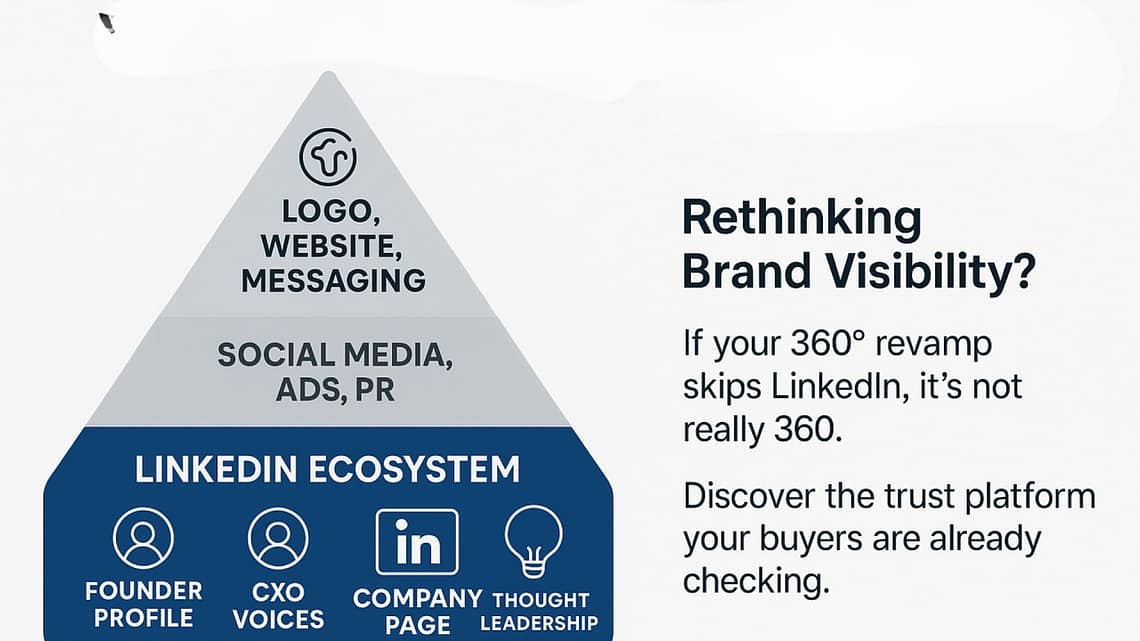
Strong branding isn’t about isolated profiles. It is about creating a reputation ecosystem where the company brand and the personal brands of key leaders reinforce each other. This creates an authority multiplier.
Action Step: Map the unique strengths of each leader. Ensure they complement rather than duplicate each other to create a comprehensive brand tapestry.
4. Cross-Channel Brand Synergy
Your LinkedIn presence shouldn’t exist in a vacuum. It must align with your website, speaking engagements, and media appearances. When the message is consistent across all touchpoints, credibility compounds.
Action Step: Create a brand alignment chart that ensures consistent messaging themes across all platforms while adapting to each channel’s unique strengths.
5. Engagement Architecture
Don’t just broadcast—converse. You must design your content and profile elements specifically to encourage meaningful interaction.
Action Step: End every post with a thoughtful question and make a commitment to respond to every comment within 24 hours.
6. Visual Differentiation
In a sea of text-heavy profiles, visuals are your anchor. Strategic visual elements create instant recognition.
Action Step: Create a set of branded cover images, custom graphics for regular content series, and a visual style guide for all posts.
7. Cross-Profile Amplification
Create a network effect where leaders engage with company content and the company highlights leadership thought leadership. This dramatically expands reach.
Action Step: Establish a system where leaders and the company page strategically support and share each other’s content.
The Clinical Trial: Does It Work? I recently implemented this exact framework for a B2B software company struggling to generate leads. The results were clear:
Inbound inquiries increased by 217% within 90 days.
Sales cycles shortened because prospects entered conversations already trusting the brand.
Reputation grew: The CEO was invited to speak at two industry conferences based solely on their new thought leadership content.
Your Next Steps The companies that thrive on LinkedIn aren’t necessarily the biggest—they are the ones with a strategic approach.
Take a hard look at your current LinkedIn ecosystem. Does it reflect the quality of your work? Does it position you as a leader? If not, it’s time for a change.
Whether you tackle this internally or bring in expertise, start treating LinkedIn as a business development engine, not a social media checkbox. For many of your most valuable prospects, your LinkedIn profile is your brand.
What step will you take today to start transforming your LinkedIn presence? I’d love to hear your thoughts in the comments!